
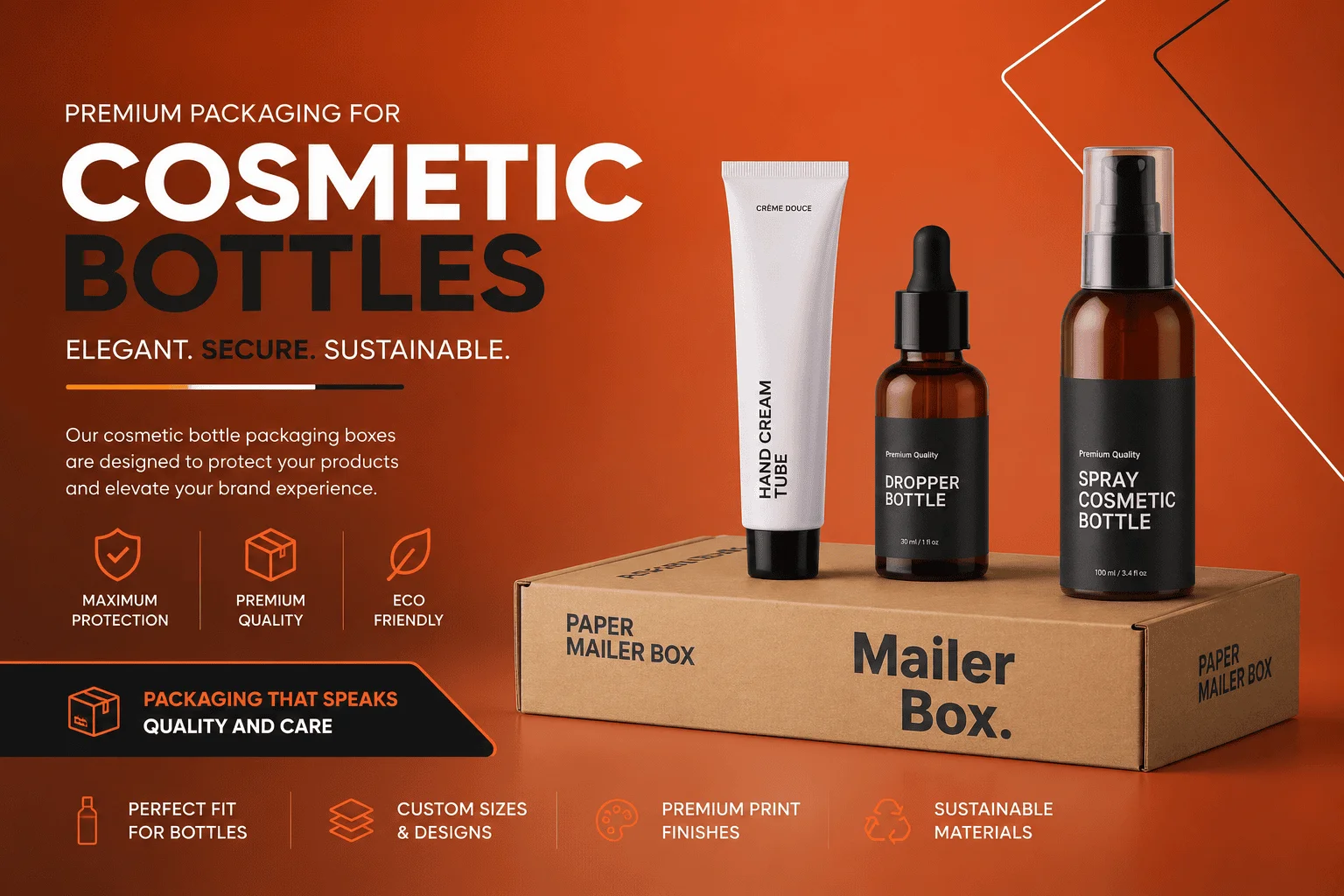
Every November, UK beauty brands and their retail buyers have the same conversation. The brand presents a Christmas gift set in cosmetic packaging boxes that the design team is genuinely proud of. The outer box carries embossed typography, a foil-stamped seasonal motif, a ribbon pull, a magnetic closure, a debossed brand panel on the reverse, spot UV highlights across the front, and a window cutout showing the products inside. The buyer looks at it for a moment, then asks what the RRP is. The brand says thirty-two pounds. The buyer says it needs to be twenty-eight pounds on shelf to compete in that category position, and suggests finding somewhere to reduce cost. The design team goes back and removes the ribbon. The buyer says they need another pound out. The debossing goes. Then the magnetic closure. By the time the box reaches the gifting aisle it carries four of the eight original features, and none of them work together the way they did when all eight were present, because the design was conceived around all eight rather than around the two or three that actually matter.
This conversation happens because beauty gift set packaging in the UK gifting aisle is briefed from the wrong starting point. It begins with what the packaging could include rather than what it needs to do, and the distance between those two starting points is where gift set boxes accumulate features that add cost, reduce coherence, and ultimately produce packaging that looks busier than it looks premium. The gifting aisle is one of the most visually competitive environments in UK retail. Winning in it requires understanding what the aisle actually rewards, and it rarely rewards the box that does the most.
What the UK Gifting Aisle Actually Rewards
The UK gifting aisle during the Christmas trading period functions differently from the rest of beauty retail in ways that change what packaging needs to achieve. Standard beauty retail is a considered purchase environment where shoppers spend time with products, read claims, assess ingredients, and evaluate value. The gifting aisle is a proxy purchase environment where shoppers are buying for someone else, often under time pressure, with imperfect knowledge of the recipient’s preferences, and a primary need to communicate that they spent thought and care rather than that they made a carefully informed product decision.
This proxy purchase dynamic means that cosmetic packaging boxes in the gifting aisle are evaluated primarily on their ability to look like a good gift rather than on their ability to communicate product credentials. A shopper buying a candle or a face cream for themselves reads the packaging carefully. A shopper buying a gift set for their mother reads the packaging for a single signal: does this look like something worth giving? Everything the packaging does either contributes to that signal or dilutes it, and packaging that does too much frequently dilutes it by creating visual complexity that reads as busy rather than as generous.
The gifting aisle also operates under a price architecture that cosmetic packaging boxes need to support rather than undermine. UK beauty gift sets at retail cluster around specific price points, twelve to fifteen pounds, twenty to twenty-five pounds, thirty to thirty-five pounds, forty-five to fifty pounds, that buyers use to organise gifting shelves into gift-giver budget tiers. A gift set whose packaging cost has been driven upward by feature accumulation either compresses product margin to the point where the set becomes uncommercial, or pushes the retail price above the tier it was designed to occupy, placing it in competition with sets whose product content is genuinely richer rather than whose packaging is more elaborate.
Why Feature Accumulation Happens and What It Costs
Feature accumulation in beauty gift set packaging happens for understandable reasons that don’t individually look like mistakes. A brand wants the set to feel premium so it adds a magnetic closure. It wants the set to feel seasonal so it adds a foil-stamped motif. It wants brand presence so it adds a debossed panel. It wants product visibility so it adds a window. It wants gift-ready presentation so it adds a ribbon. Each decision makes sense in isolation. Together they create packaging whose visual complexity exceeds what the price point supports and whose production cost exceeds what the margin allows.
The cost consequence of feature accumulation in cosmetic packaging boxes is straightforward and predictable. Every finishing effect adds tooling cost that amortises across the production run, per-unit material cost that applies to every box, and production time that affects lead times and minimum order quantities. A box with magnetic closure, ribbon pull, window cutout, foil stamping, and spot UV applied to a matte laminated surface carries a production cost that is typically two to three times the cost of a box with a single well-chosen finishing effect and a clean structural design. At a thirty-two pound retail price point with standard wholesale margins and retailer terms, this production cost difference frequently makes the elaborately featured box uncommercial before any other consideration is applied.
The perception consequence is less immediately quantifiable but commercially more significant. A gift set box that carries more finishing effects than its price point warrants doesn’t look premium to a shopper who handles it on shelf. It looks like a box that is trying to look premium, which is a different signal entirely. UK shoppers in the gifting aisle, who are handling dozens of boxes within a single shopping visit, develop a rapid intuition for the difference between packaging that is genuinely well made and packaging that has accumulated features to create an impression of quality rather than to express it. The former creates purchase confidence. The latter creates a vague unease that the shopper often can’t articulate but acts on by putting the box down.
What Single-Feature Discipline Produces
The cosmetic packaging boxes that consistently perform in the UK gifting aisle tend to share a discipline that experienced buyers describe in various ways but that amounts to the same thing: they do one thing exceptionally well rather than several things adequately. A box with a single precisely weighted magnetic closure, clean matte lamination in a considered colour, and nothing else communicates quality through the closure’s authority and the surface’s precision in a way that a box with five finishing effects of uneven quality doesn’t match. A box with a single area of foil stamping positioned with genuine care against a surface that makes the foil work communicates more premium than a box where foil, debossing, spot UV, and ribbon compete for attention across the same panels.
This single-feature discipline is harder to brief than feature accumulation because it requires making a choice about which element will carry the premium signal rather than distributing that responsibility across multiple elements. It requires confidence that one well-executed element is more powerful than five adequate ones, which runs against the instinct that more features demonstrate more investment. But in the UK gifting aisle, where shoppers are making rapid assessments under time pressure against a shelf full of competing options, the packaging that communicates its quality signal most clearly in the shortest handling time consistently outperforms the packaging whose quality signal is distributed across a longer inspection sequence than shoppers actually complete.
The commercial consequence of single-feature discipline is that production cost concentrates where it creates the most perceptible impact rather than spreading across features whose marginal contribution to purchase conversion is low. A box that would have spent its feature budget across magnetic closure, ribbon, debossing, and spot UV, and achieved adequate execution of all four, might instead spend the same budget on a magnetic closure of genuinely premium specification, achieving a closure quality that shoppers notice and remember rather than four features that shoppers process without retention.
How Structural Simplicity and Product Visibility Work Together
One of the most consistent decisions that strong-performing beauty gift set packaging makes in the UK gifting aisle is treating the products themselves as the primary visual element rather than treating the packaging decoration as the primary visual element. A cosmetic packaging box whose structural design allows the products to be seen clearly and presented generously communicates gift value more directly than a box whose elaborate exterior decoration prevents the products from contributing to the visual case for purchase.
Window design in beauty gift set boxes is where the relationship between structural simplicity and product visibility is most clearly expressed. A window that occupies a considered portion of the front panel, positioned to reveal the products at their most appealing angle, with a clean undecorated border that lets the products read without competition, communicates gift value by showing it. A window squeezed into a corner of a panel dominated by foil motifs, brand typography, and decorative graphic elements communicates the products as secondary to the packaging, which inverts the value hierarchy that gift shoppers are actually responding to.
Structural height and proportion in cosmetic packaging boxes affect how gift sets read in the gifting aisle context where boxes are displayed upright on shelf rather than laid flat. A box whose height and proportion are calibrated to the products inside, creating a relationship between box volume and product volume that feels generous rather than padded, communicates that the set is well considered. A box whose proportions were determined by shelf height or visual presence considerations rather than by the products themselves creates dead space that shoppers notice as packaging rather than gift, which reduces perceived value regardless of how elaborately the box is decorated.
What Good Gift Set Box Briefing Looks Like
A brief for cosmetic packaging boxes for UK gifting that starts from what the packaging needs to achieve rather than what it could include produces different specification decisions and better commercial outcomes than the feature-accumulation approach that most gift set development cycles fall into.
Starting from the retail price point and working backwards through wholesale margin, retailer terms, product cost, and available packaging budget establishes the actual cost envelope before any specification discussion begins. A brief that knows the packaging budget is four pounds per unit before the specification conversation starts produces a different and more disciplined specification than a brief that builds a specification and then discovers the budget during buyer negotiation.
Identifying the single most important quality signal the packaging needs to communicate, and building the specification around delivering that signal exceptionally rather than distributing budget across multiple signals adequately, produces the focused execution that the UK gifting aisle rewards. If the quality signal is tactile premium, the budget concentrates on surface finish. If the quality signal is structural generosity, the budget concentrates on proportions and product presentation. If the quality signal is considered restraint, the budget concentrates on precise colour and clean construction.
Reviewing competitor gift sets at the intended retail price point before finalising specification reveals what the packaging is competing against rather than what it is aspiring toward, which are frequently different things. A gift set box designed without reference to its actual shelf neighbours often discovers that its specification sits either below the category floor or above the category ceiling for its price point, both of which create commercial problems that shelf context review at the brief stage prevents.
Aly Packaging UK produces cosmetic packaging boxes for beauty gift sets across the UK gifting retail market, with specification options suited to the price points and finish requirements of the major UK gifting retail channels. Contact our UK team at sales@alypackaging.com or call 1-844-259-7225 to discuss your gift set packaging requirements.


